Bixie Cut — The Pixie-Bob Hybrid for Heart Faces
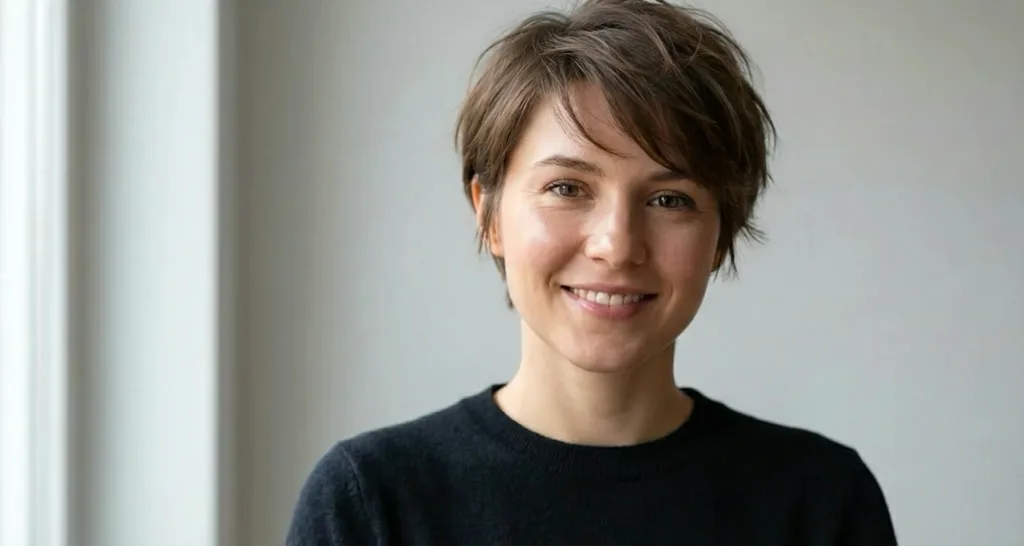
Longer than a pixie, shorter than a bob — the bixie sits in the sweet spot that softens a wide forehead while framing a narrow chin.
Every 5 weeks
See the Transformation
Side by Side
Compare both looks in a single view
Upload your photo in the app to see your real transformation
Face Shape Guide
Wide forehead tapering to a narrow chin
Add Volume Here: Jaw & temples
Width below the cheekbones balances the wider forehead.
Keep It Short Here: Forehead
Volume here accentuates the top-heavy shape — keep it light.
These are starting points — AI try-on shows you the real result on your actual face.
Why It Works
Heart-shaped faces have a wider forehead and narrower chin, so the ideal cut reduces upper-face width while adding visual interest around the jawline. The bixie — a blend of pixie and bob — achieves this perfectly. The longer pieces at the front and sides (bob influence) frame the jawline and add width where the heart face is narrowest, while the shorter, textured layers at the crown (pixie influence) avoid adding bulk at the temples that would emphasize forehead width. The result is a balanced silhouette that softens the triangle shape of a heart face. Textured, piece-y bangs further break up the forehead line.
Best for
- Heart faces that keep soft temple length or side-swept pieces
- Short hybrids that do not strip the upper third bare
Skip this if
- Ultra-tight temples with all volume only at the crown
Common mistakes
Top-heavy short hybrids emphasize forehead width. Soft temples or forward pieces help. On a heart face the job is to soften forehead width and add weight lower on the face — ignore that and bixie starts working against you.
What to ask your barber
“Bixie with soft temples or side-swept front. Heart face — do not bare the whole upper third.”
How to Style
- 01
Ask for the back tapered to pixie-length and front pieces reaching the jawline.
- 02
Request textured, wispy bangs for forehead softening.
- 03
Style with a small amount of texturizing cream or wax.
- 04
Blow-dry the crown with fingers lifting the roots for volume.
- 05
Maintenance trims every 5-6 weeks to keep the pixie-bob balance.
Styling notes
Ask for a bixie with the back tapered short (pixie-length) and the front pieces left longer, reaching the jawline or just below the ears. Request textured, wispy bangs rather than blunt bangs to soften the forehead. Style with a small amount of texturizing cream or wax, working it through the longer front pieces for definition. Blow-dry the crown with your fingers lifting the roots for volume. The back should be left to air-dry or lightly diffused. Maintenance trims every 5-6 weeks keep the pixie-bob balance sharp.
Try on your photo
The bixie sits in a narrow sweet spot between pixie and bob — slightly too short and it becomes a pixie that may expose the wide forehead, slightly too long and it loses the textured edge. AI try-on lets you find the exact length that balances your heart-shaped face.
Preview this style on your photoFAQ
Frequently Asked Questions
How is a bixie different from a pixie?
A bixie keeps the front and side pieces longer (ear to jaw-length) while tapering the back short like a pixie. This hybrid gives more face-framing versatility than a pure pixie while maintaining the ease and edge of short hair.
Is a bixie hard to grow out?
Easier than a pixie because the front is already at bob-length. As the back grows in, you transition naturally into a short bob without the awkward in-between stages that pixie grow-outs typically involve.
Does a bixie work with thin hair?
Yes — the short, layered structure removes weight and creates the illusion of thickness. Thin hair actually holds the textured, piece-y look of a bixie better than thick hair, which can require more thinning.
You Might Also Like




Want to see it on your own face?
Open the free hairstyle previewer, upload a selfie, and compare looks before you book.
Preview styles on your photo